Showing posts with label ancient wisdom. Show all posts

Wednesday, 1 April 2009

beeswax

Wax, both paraffin wax and beeswax, is a material as fundamental to batik as dye and cloth. For the last few years I've been aware that there are global issues with honey bees (colony collapse disorder, or CCD) hence a potential for shortages of beeswax. And that alongside peak oil and rising oil prices will undoubtedly be peak paraffin wax and rising paraffin wax prices. I also knew that I didn't know that much about either, and so in January set about researching.

I started with paraffin wax, but fairly soon it appeared there are far more issues to learn about with beeswax. The article was written for the Batik Guild Magazine, in the event an edited version was published a few weeks ago. The full version is on my website here though the research is ongoing and will be updated. I will write up the paraffin wax research later this year too.

In the way that soy wax has been developed as a resist in the US (though I understand it's not that good for batik), and the Malaysians are working with a oilpalm waste resist, I feel in Europe we need to consider finding and developing a future home-grown source for wax, as an alternative to paraffin wax and supplement to beeswax. I thought I'd read somewhere that snowberry was used in the past for its wax qualities - berries I assume, not leaves - but can't find a reference for it now. That a new source could in fact be an old source is just as feasible as one developed from waste from another process or product.

Researching beeswax was so interesting I have become enthused to take up beekeeping! But compared to the small scale growing of woad I began last year, I think instead I will see if there is a beekeeper locally who would be happy for me to help and learn from them. As wonderful and interesting as woad growing has been, I feel it would be too big a commitment for me to try to grow as much as I envisage using, and beekeeping would be even more of a responsibility.

Wednesday, 11 March 2009

a science of qualities

For much of today I've been thinking about scientific process, following my last post on wax temperature. I have been making batik since 1990, so that's nineteen years (wow! is it really that long!). For much of this time I've had a good feeling for when the wax is not hot enough, when the room/ambient temperature is not warm enough, when the wax has crossed the threshold of 'good', and so on. The same with dyes, colour mixing, in fact everything to do with the batik process. Some I learnt from my early tutors Jin and Latif in Malaysia, but most "knowing" has been gained intuitively, through practice and observation and awareness... and over time. For instance I've never needed a thermometer to know if the room was warm enough for batikking - I came to realise I just had to consider what I was wearing. Anything more than a t-shirt and sweatshirt meant it was too cold.

My experiment last Monday in wax temperatures at different Tixor Malam settings was generalised/experimental. It was not set up to be controlled and perfectly measured, because I was more focused on the artwork I was doing. My thinking today was that if it had been a perfectly measured and controlled experiment (when it would be hard to also focus on artwork) , then that would give me precise results for only those variables (eg that wax mix). Another experiment would be needed for each variable. How maddening is that?

But more than maddening, I feel such a method takes away knowledge and understanding rather than giving it. If I heat the waxpot from calculations based on test results rather than on an innate awareness of what is necessary, garnered from experience, have I lost something fundamental?

Which led me to thinking about A Science of Qualities. I first heard about this from Brian Goodwin, I think at a talk he was giving at the University of Plymouth a few years ago. It is akin to Goethean science, and draws on impressions, intuition, sensory perception and sensory imagination, context, history, seeing in beholding, appropriate response, dialogue and consensus, and evaluation. It was so exciting when I first heard of this approach - inside me was singing 'that's what I do!, that's what I do!', meaning it's how I approach working on a painting or design. Or visiting a place, seeing a new phenomena, travelling, whatever. I don't do it in such a structured coordinated way nor with an ability to add headings to each element of my process, but what I do resonates with the pattern.

The Science of Qualities allows both the essence and the bigger connections to be expressed, through seeing the whole rather than the parts (holistic versus reductionist). But somehow I don't think it is appropriate to demonstrate wax temperatures - but now I think: why not? Isn't it easier to tell someone that from experience I found if I am wearing more than a sweatshirt the room's too cool for successful batikking than to say from experimentation I found that the thermometer must be above a particular temperature? Although it's easier for them to measure their room with a thermometer than to get me to stand there with or without sweatshirt or more... the idea for them to learn their own clothing level is much better, as their space may have variables I have not accounted for (drafts, higher ceiling, different humidity etc).

I think why I've gone the reductionist route on much of my sustainability research is that, supposedly, there's more cred to the results. I can say x y z with certainty rather than 'in my experience' which anyone could dismiss as artist waffle. Sadly.

I dug out a few articles about A Science of Qualities - this one I've read before, it's long but page 3 has a few appropriate paras. There's also this and this. Page 5 here (scroll down) describes a newish book by Brian Goodwin which is now on my reading list.

Monday, 3 November 2008

spirit of mystery

In the past (and hopefully again soon) I have given school batik workshops – they are hard work (preparation) but always good fun. Onesuch was with Kea School, as shown in these photos, for a Sense of Place project. The theme was 'The Voyage of the Mystery', and the batik style/approach was Aboriginal Art.

The Mystery was a Cornish lugger, a traditional small fishing boat, that in 1854 sailed with seven Cornishmen from Newlyn bound for sunny Australia. The journey to Melbourne took 115 days. Indeed it seems a miracle it even arrived – the boat was only 33 feet long (about 10 metres) with a beam of 11 foot 6 (3.5 metres). It wasn't meant to be ocean-going, and indeed most men on board had never been out of sight of land! At the time, the Mystery was the smallest boat on record to have made such a long voyage. Read more about the voyage of the Mystery here.

Now, in 2008, the Spirit of Mystery rides the waves. Pete Goss has built a new lugger to the same specifications, and along with several family members is re-creating the journey made by those Cornish fishermen 154 years ago. They are using the same navigational tools and technology as then – no modern gizmos. Other than communication tools that is, so they can update their blog (and stay in 'instant' touch with family). They already have had ups and downs (in wind and seas) but the boat is running as well as the original Mystery.

So where is the connection with Sustainable Batik (other than through school workshops)? For starters, a quote from today's entry is a good one for natural dye growers to remember: "Mother Nature rules out here and you just have to make the best of what you have."

There is something more, that I'm not sure I can explain well in this blog. It is something about pride and community, pride that Goss has taken this on, has recognised our forefathers did something quite immense as well as brave, and is re-living it for us, bringing part of our history alive.

It's my hope that my own experiences from living in Australia in the 1980s and introducing Aboriginal Art (as far as I am able to understand it - another blog!) into schools also brings something more meaningful and substantial than just playing with wax and dye.

Wednesday, 15 October 2008

frugality (blog action day - poverty)


"Frugality does not mean poverty or deprivation. It means the wise use of resources."

Paul Hawken in 'The 11th Hour'.
For full quote, see NPQ (4th from bottom).


Rather than write about poverty, the theme of this year's Blog Action Day, I thought instead I'd consider the wise use of resources as the means to avoid it. Partly I am inspired by that wonderful organisation Practical Action which devises and/or introduces very simple technologies to lift struggling communities out of dependency or poverty.

A recent mailout from Practical Action describes a fish-rice culture introduced to Bangladeshi rice farmers. A minor re-design of rice fields allows fish to also grow there. The rice thrives from the fish naturally fertilising it, consuming insect pests and circulating oxygen, giving an apparent 10% increase in yield and savings in purchased pesticide and fertiliser. As well as having fish to eat, the farmers now also grow vegetables and bananas on the dykes.

Fish-rice culture reminds me of the traditional silk production cycle – silkworms feeding on mulberry bushes, the cocoon waste following silk harvesting fed to fish in the pond, with fish waste being scraped from the pond floor annually to fertilise the mulberry bushes.

My dream is to find a similar cycle for woad production. At the moment, in theory, I can use organic chicken manure to fertilise soil (for nitrogen content). Perhaps chickens will eat post-extraction plant waste, but there isn't much of it (currently it goes in the compost bin). Perhaps as woad is such a slug-magnet there'd be mutual benefit with poultry living alongside? Whether simple or complex the cycle turns out to be, I said it was a dream and probably it will stay that way. I don't have and am unlikely to ever have enough land to grow enough woad for all my own dyeing – I will always need to buy it in.

Earlier in the year I visited Ian Howard in Norfolk, who's been at the forefront of woad revival in Britain for some years now. Since processing my comparatively meagre crop a month ago I have thought a lot about the time and effort he must put in, leading to the high cost of woad-sourced indigotin. Occasionally I've wondered whether it is really worth it... but then think back to Procion dyes and the minimal information available about its production. It means so much more to know who has grown and produced the dye and where, how, and why! To know this farmer has and is increasing specialist knowledge of the crop, knowledge that would have been garnered over generations of past woaders. To trust that he knows he needs to take care of his land in order to continue to grow it, and to maintain both quality and financial return. That must mean a wise use of resources.

Synthetic dye... dye with no entity, no place, let alone no place in nature, and virtually no history. Dye without a soul. Manufactured anonymously somewhere in the world from petrochemical from somewhere else in the world, packaged up and sold on somewhere else again. There is no trail, no depth – any dyeing from this becomes just a colour, nothing more. So how to be sure resources have been used wisely? Impossible, it seems, with Procion MX.

One is cyclical, working within nature's limits; the other based on linear production. Cyclical is frugal, implying taking only what nature can afford – some years not much, but in others a bonanza. In comparison linear can only ever lead to poverty somewhere for someone, surely?


update, midnight at end of Blog Action Day

Having spent the last hour reading other blogger entries for this day addressing poverty, I have felt moved enough to do something more (the concept of Blog Action Day works!). Instead of occasional donations I am setting up a regular payment to Practical Action. Their donation page says the following:

Please do something special today. Offer the hand of friendship to poor communities by making a regular donation by Direct Debit. Be part of the solutions that will change the lives of people in poor communities day after day, year after year.

For over 40 years Practical Action has been investing in simple and extremely effective technologies that give determined people the power to change their lives. Our experience tells us that you can’t solve poverty by giving handouts – instead we work together with people in their homes and communities, listening and learning from them. We work at the heart of desperate communities across the world, helping people to find simple, sustainable solutions to problems they face.

- We don’t believe in imposing quick fixes. So we make sure that all our projects are sustainable, use local materials and are organised and run by local people
- We overcome poverty across the world using practical, tangible and often innovative solutions. We use simple technologies and share our knowledge widely.
- We make sure that the money that funds our work goes directly to our offices in that country rather than the government, so you can be sure the money goes only to the people who need it.


Monday, 6 October 2008

quality not quantity

I woke up yesterday morning thinking about my two grams of extracted woad pigment... of the amount of work involved in its production. And, even allowing for the cool wet summer's affect on growth, how disproportionate is the effort to the result.

Later I read this article about Cornish vineyard Camel Valley Wines. The weather knocked out nearly 80% of their grapes but also created circumstances for those remaining being ideal for their sparkling wine 'Cornwall'. So if 'Cornwall' can compete with Champagne (as the vineyard owners believe), then I shouldn't be at all despondent about my measly woad pigment result...

Quality it is then. Not quantity.

. . .

While writing this I've been wondering whether there's a connection between grapes getting extra fizz from the particular circumstances of this year's summer, and the exuberance of foam I got during woad processing, also experienced this year for the first time by Helen Melvin (in North Wales) (see previous post and comments). Is it an omen of the champagne of blues to come?

Thursday, 19 June 2008

waxing

The woad is growing nicely now, and it's time to get waxing to have something ready for dyeing. Here's one just finished, taken from a sketch of the Brown Willy skyline (Cornwall's highest peak) at sunset from a favourite perch, Black Rock. Because woad-dyeing will be a learning process I want to keep the first ones simple in terms of waxing - so less wax is wasted on (possible) disasters. A series of batiks of moorland peaks may not be particularly creative or ambitious but is a nice excuse to get out for some longer walks than I've been doing lately! Also, being nearly midsummer, my mind turns to our inherited stone circles and other monuments with solstice and equinox alignments. Roughtor (second highest hill) was, apparently, very important to our Iron Age forebears. So respecting their beliefs and knowledge by focusing on views of Roughtor from prominent peaks and places doesn't seem quite so shallow after all, and maybe I will learn something too.

Minimal lines will also help me get a feel for predicting balance of (should I call it 'colour' or 'tone'?) after dyeing - the impact white lines in a deep blue will have. At least I hope to get deep blue!

Also, as many of my past batiks have treated wax as though there's no tomorrow, literally swamping the cloth with it, I need to start from the opposite extreme of less is more. I do now recognise there are limitations to the amount of wax I should use per batik, as there are limitations to the amount bees can be expected to produce annually (on the one hand) and availability of paraffin wax relates directly to availability of oil stocks (on the other). And production of paraffin wax contributes to global warming, but all-about-wax is for another post another time.

A new problem hit just after I'd waxed this piece - where to store it? Up until now I've worked on just one or occasionally a few related pieces at a time - waxing, dyeing and finishing - before moving on to the next. But not now... I will need a number of pieces ready for the woad and then do the dyeing in a batch. The cloth can't be folded and put in a drawer - the wax would crack on the fold lines. It really needs to stay flat. My mind sees it hanging from one of those coat hangers with clips on but I don't have any, nor a bound-to-stay-clean and unlikely-to-get-bashed (=cracked wax) spare hanging place in the studio, or house. I'm trying to approach this sideways, hoping tangentiality will let the obvious solution slip into view.

There's another reason for waxing these pieces now. Before I start any woad dyeing I need to finish the birds batik mentioned back in January and to do that I need to get some canting practice in for very long smooth curved lines - requiring a move of the whole body in sync with the line. Like all craft skills, you have to keep practising - stop for any length of time and you get rusty. Like me. The design calls for two perfect spirals within the white circle - any imperfection would just kill the picture. So I'm nervous and need to get confident before starting.

I also mixed up some Procion dyes yesterday and am running a fastness test on them. Three of the colours were first opened about 18 months ago, theoretically past their shelf life, the fourth is about a year old. I really don't want to buy new Procions just now... but the thought of having to re-wax because the dyes didn't fix is too scary!

Wednesday, 4 June 2008

research on bees - a petition

Beeswax is one of my raw (and most valued) materials, and the historic resist for batik, so can I urge all UK readers to sign this petition.

Think not only of their wax and honey, both ancient traditional natural materials, but also of bees 'services' to agriculture. They fertilise up to a third of our crops - if bees seriously decline there will be disastrous repercussions for crop fertility. A beekeeping friend indicated his more experienced neighbour lost 23 out of her 40 hives last winter.

The petition is asking for
funding for research into the rapid decline of honey bee colonies

http://petitions.pm.gov.uk/BeeResearch/

and runs until June 11th (a week left to sign).

The following came in the original email I received (Mark: hope it's OK to quote you):

"Quick background. I'm an erstwhile beekeeper, and this year painfully aware
of the lack of honey bees around. I leave a clump of brassicas on the
allotment every year for them to feast on, but until yesterday i hadn't seen
a single one. This combines with a local newspaper article (I live in
Warwicks) that colonies in this area - in line with the national average -
are down by 30 per cent. With no reserves in the 'British' wild (even more
serious news) I hardly need reminding anybody who is making connections that
this is part of and parcel of a bigger environmental catastrophe. I do not
use that term lightly - but without honey bees - even looked at in the most
blatantly pragmatic sense of 'eco-services' provided, our daily diets are
going to be seriously narrowed in terms of the vegetables and fruit we will
no longer be eating.

It goes without saying that last year's disastrous weather is a major factor
in the bee collapse. In other words, continued anthropogenic climate change
may spell the end of the British honey bee. The request for research money
may not help that in itself, but it might remind government on the
connectedness of all things, including the small but essential ones to our
bodies and souls, we tend to forget.

Sign the petition please, if you will!
cheers, mark"


More about bees at the British Beekeepers Association, whose site pointed me to this recent Daily Mail article about the funding situation by an enlightened (on this) politician. Last Saturday's Guardian had this informative article "Last Flight of the Honeybee". And here, a link to the government's response to an earlier bee research funding petition. Read it. Need I say more...

Thursday, 10 January 2008

art before art

"Before there were art galleries, art was a song of the soul..."

Read the full article by Paul Devereux, in Resurgence 246.

Thursday, 29 November 2007

environment, heritage and the arts

I do not think the measure of a civilisation is
how tall its buildings of concrete are, but rather how well its people
have learned to relate to their environment and fellow man.


Sun Bear
, Chippewa, USA


This is one of those profound but obvious statements that I was glad to stumble across again recently (in the Survival International catalogue). It sums up well the awareness that grew on me when travelling in Australia in the late 1980s. Today I'm so happy to read that Peter Garrett (of Midnight Oil) has become Australia's new Environment Minister. More than that his ministry covers Environment, Heritage and the Arts. These three aspects of life are so interlinked in traditional ways of thinking that I am smilingly thrilled for that nation's First Peoples, I hope it works out for them. Also I have real hope for the future if this cultural attitude leads Australia to become once more a (the?) leading player for the environment and our planetary future (I think back to Bob Hawke's signing of the Antarctic World Park Treaty, two full years before campaigning even began in Britain).

Yet here in England, Environment comes under the Department for Environment, Farming and Rural Affairs, signifying environment as a place outside of urban and suburban contexts; while Culture (which I think is meant as a catchall for Heritage and Arts) is lumped into a Culture, Media and Sports grouping. Within the DCMS, Culture is joined up with creative industries and tourism.

Culture to me means the way of life of a group of people, even a nation - and not a packagable, brandable, competitive, marketable commodity. The arts are not an industry, surely? They are about our soul, our situation and our sagacity. Aren't they?

What hope is there for our nation, for our children, for our planetary survival no less - if at ministerial level the majority of our citizens are disconnected from the environment?

Australia, show us the way...

Wednesday, 31 October 2007

dilemma resolving

A good thing about outing yourself – as I did with my dilemma of work direction (see this previous post) – is that because you have faced facts and acknowledged the situation you know there is only one way to go from there.... towards resolution. There's no more excuse to dither.

So late last week I contacted Jane Deane of Cross-Eyed Chameleon to find out if they had any imminent native plant dyeing (on cotton) workshops, and specifically local plants. I'd met Jane a few months ago at their Open Studio in Launceston, and in between the chinwag I realised these were people who knew loads about natural dyeing - and even better shared my outlook on the environment.

My big plan had been to move towards working in indigo – or woad. Solely in blue. That ambition hasn't gone but threw up its own dilemmas: the majority of the remaining Mekong work wasn't envisaged for indigo and even if it did I'm not sure the show would hang together half in indigo and half in brilliant Procion. They wouldn't complement each other – the remaining work would have to be in Procion.

And (as already discovered) indigo/woad makes a mess and I don't have proper space to allow that mess. So indigo work is delayed until I do have a suitable workspace. Hmmph. Grrrr. Aaaagh! But.

Some months ago I joined a couple of natural dye lists on Yahoo, mainly to pick up tips about indigo dyeing - a kind of preparation and a constructive remedy for the unsatiated urge. An email came in response to a comment I'd left about wax and resin – from Teresinha Roberts who's behind the amazingly informative All About Woad website. She does her woad dyeing in a greenhouse, keeping the vat alive right over the summer. And... ping! So could I! Why had I been thinking bricks and mortar and evicted car? Someone somewhere not too far away must have a disused greenhouse I could hire next summer... and how eco-friendly that would be, with its own solar heating. Brilliant! And what's more... a deadline to work towards.

What also has come out of these dye groups is recognizing the buzz others are getting from dyeing with local plants, whether garden grown, picked from the wild (with caution), or retrieved from 'waste' (eg onion skins); and their sharing of knowledge and re-discoveries in traditional ways, and ecological and health issues.

The wildlife, agriculture and culture surrounding a local river, from its sources here on the moor through to its estuary, is my next project (though it may evolve). Being able to dye from plants and vegetable matter found along its banks and valleys fits perfectly with the theme... and my intention to source locally where possible. To help that along I began an informal self-taught common plant ID course in the summer. For twelve months I am surveying four local one-kilometre squares for fifty locally common plants, learning about them as I go and in the process helping create a database for the Parish Wildlife Project. I was ashamed of my ignorance and pleased that I already knew quite a lot... just not their names! But already I'm finding an acuter awareness of these plants and their localised ecosystem, and hopefully this will develop into a feel for appropriate amounts that can be taken for dyeing.

Like woad work, this would be a spring thing... in the meantime I can learn more about plant dyeing – techniques, tools and space needed. Also... how combatible the various processes are with batik (not melting the wax!), sustainability issues around mordanting, and lightfastness. And also, whether natural plant dyeing is more eco-sustainable than chemical dyes, once all externalities are built in. I'm still to be convinced one way or the other.

Except with woad. My feeling is that woad will win easily over chemical dyes, if I could grow my own. But alas I have read woad is not a lover of acid soils. Which is Cornwall's lot.

Monday, 15 October 2007

environment

Bloggers Unite - Blog Action Day

Being Blog Action Day for the Environment I thought it might be time for some introspection. Umm? Environment... introspection? Well, yes. But it's not really about me.

For me, environment isn't an external thingie to occasionally be looked at and tick-box admired/appreciated/enjoyed, or something that can be taken for granted as always being there, whether 'there' is here now under my feet or somewhere else, somewhere over there.

Environment is part of us just as surely as we are part of the environment. At least that's how it feels to me. In some places around here, especially up on the moor I feel a deep bondedness with the land, with the atmosphere, with 'place'. I feel we have melded and I move within it, not over it and distracted by other thoughts. I no longer concentrate on direction or footfall, only occasionally being aware that somehow miraculously I am still on track for wherever I already was heading. Now if this sounds a bit flunky, then let me tell you that I – and others – have found our way off familiar moorlands despite sudden windless fogfall. Your head is little use to you at this time, you have to allow all your body's tunings to guide you. Let's face it, your head (mine anyway) would be useless and panic, thinking of all sorts of bad possibilities... like sudden huge endless quaking marshes which you've never seen before so and which seem to have surrounded you! But your body, in harmony with nature, is led with "feelings" (physical not emotional)...

Yesterday afternoon I walked from my house up to Eastmoorgate and on to East Moor. A last minute thought was to take my camera... shame I hadn't thought sooner as the battery was low and konked out just when everything was getting very interesting. Oops.

I walk this way once or twice a week as far as the gate, and once or twice a month out on to the moor. Recently I've been picking blackberries and bilberries (local name, whortleberries). I know the seasonal haunts of jay, cuckoo and golden plover... and appreciate songs and calls of other resident birds. I stop on the bridge over the Lynher and gaze into its water, both upstream and downstream, every time I pass. I've seen herons and an otter here. I walk alongside moorland streams, gazing at their swirling patterns of clubrush. I see the changing colours in the fields, the hedges, the views. I smile appreciatively at the oft-repaired fences and gates. I sit or lie on a large stone at dusk and just listen. I watch the sunset, the cloud patterns, the stars and rising moon. Every time I go this way there's some new marvel as well as the re-assurance of the familiar. And from this place comes inspiration for paintings and designs.

I'm fascinated, hmm, don't like that word. Intrigued, maybe? I'm intrigued... not quite that either. It's that Australian Aborigines have such a deep familiarity, connectedness, with the land that (I have read) they share a surname with plants, animals, land features and areas. They are that close. In the Maori language the word whenua means both placenta and the land. Even in English the root of the words nature and natal is the Latin nasci 'to be born', and nature also implies "identity or essential character" and "the whole system... of all physical life... not controlled by man" (McCleod and Hanks 1985). So being bonded with nature is a pretty ancient way of being!

It's also a zillion miles from the world of objectivity, where everything including nature exists only as we look at it and record it. There is a time and a place for measuring, of course, but I feel it's imperative that as a society we re-learn the wonder and joy of nature, we re-discover our connectedness with nature and grow a familiarity with the nature around us.

And that's the rub. It needs to be the nature around us not the nature in some other place, not that there national park, or them there beaches, or – dare I say it – some other country! Not to say don't go and visit these places... the unfamiliar is great for stimulating the mind! But it definitely can't replace the comfortable familiarity of our own nature.

My painting has always been inspired by and reflected the natural environment around me, (with occasional exceptions of larger environmental issues). I paint what emerges from within, by which I mean what's around, what I have experienced and felt... and I encourage students to do the same. It's my hope my art also plays a part in assisting others' connectedness with nature, to encourage viewers towards their own immersion in nature.


Reference
McLeod & Hanks (1985) The New Collins Concise Dictionary of the English Language London: Guild Publishing
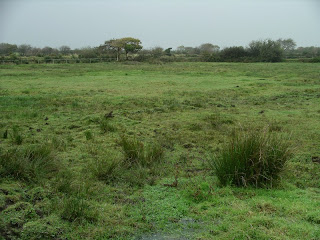


...and just when it was getting interesting, the battery conked out! (Also a reason why all the above shots were, literally, first shot.)

Tuesday, 24 July 2007

sun and mud

I've been playing with solar power. Five or so years after first pondering it I have bought a Freeplay Ranger solar-powered and wind-up radio, and also a Freeloader portable solar charger for mobile and camera. I love them both!

Proof that "objects" are anything but... an hour after ordering the new radio I turned on the kitchen radio: hissssssssss.... Hmm. It was working at breakfast. Only a few hours later it had died. Over twenty years old I think, it worked brilliantly for most of that. And presumably held on faithfully until the last moment, right until knowing the next generation was safely on its way. Something like old and ill people who "hang on" until an occasion, a particular moment has been reached and then they die, presumably more at peace than before.

Unfortunately I had earmarked the new radio for the studio, but couldn't transfer the existing studio radio to kitchen because I play (music) tapes on it (especially while the CD player is out of action). I thought a second new radio would be needed but you know what's so great: having a portable radio again! I take it round with me to whichever room I'm in, and it's no effort! I hadn't realised just how lazy and consumerist wired appliances can make us, well, me anyway.

So far it's stayed playing just by being on window sills (after an initial 24 hour electric charge) but I am spending a lot of time maximising direct sun dose of both toys. Ideally they need to be outside in direct sunlight but unless I also am outside that's not so easy. They are trickle charging through the windows but several days of daylight and some sun-through-the-window didn't re-charge the Freeloader enough to fully charge the mobile; it took another 10 minutes on electric.

But what about charging a wax pot by solar, or rather charging a battery to provide power for the wax pot? It doesn't seem feasible at the moment – not just financially but also in terms of creating enough juice to fire the thing! None of the solar panels I've read about online will do more than run laptops, electric lawnmowers, TVs, lamps etc, certainly nothing hotter than a toaster. So definitely not wax pots or Burcos (I use the Burco to boil wax out). But solar thermal collectors for heating hot water (for boiling out) might work, though personally I use little hot water during our warmer months. Then there is the question of Cornwall's sunniness... plenty hot water in summer, warmish only in winter.

Carbon reduction through lower power consumption is the main reason for me investigating renewable-powered tools. But I also believe within a few years electricity will start being rationed, either by a number of off-hours per day or through personal allowance. There's a few studio-based essentials I feel handy to have around – radio for news, wind-up torch and an ability to charge the mobile and camera. But if I have to seriously curtail waxing time I need to find either an alternative way to heat wax (and water to remove it) or find a non-heat-requiring resist.

In Malaysia (where I first made batik) wax was heated in a wok over a naked flame, either from a gas stove or charcoal fire. In my current studio set-up with its low ceiling, neither sounds desirable especially in winter when window-opening is minimised. But I need to find out how carbon intensive these methods are – if they are carbon-practical alternatives then my workspace may need to change from an indoor one to... hmmm. Outdoor working is great but the cold, draughts, damp and everything else about the Great British Outdoors are not conducive to wax resist working.

I've been fascinated by mud resist since first hearing this is how Mali people decorate cloth. But their batik doesn't use mud to resist dye in the conventional sense, instead mud is applied to yellow-dyed cotton, with something (iron?) in the mud turning the yellow brown. Un-mudded areas are discharged with a caustic solution returning them to white. It would be great if china clay could be used in some way – but again I stumble with my lack of chemical knowledge. I do want to experiment with china clay, local river muds and natural dyes, but the potential size of the experiment seems overwhelming! Either I spend aeons on trial and error, or I seek help!

By chance a few weeks ago while visiting an artist/gardener in the next village she produced some decorative batik she'd made as a student. Which led into discussion of various techniques... as she had used mud resist! And then she produced her notebook full of recipes and samples – which I have on loan... It's a start!

Monday, 18 June 2007

talk talk

I feel bad for not posting more pictures. It's difficult when I don't have relevant ones – I didn't take my camera away with me. Nor my sketchbook. I decided not to as I was travelling light. But... here is the invitation to the Batik Transitions exhibition at the Museum of East Asian Art in Bath – bit crumpled after being in my pocket for the day. Great exhibition - stunning traditional and contemporary batik.

Where I had an interesting conversation too. A lady whose passion in life was doves had found my postcard "Tradition of February 14th" (see Robin, another opportunity for a pic) and, after hearing I was in the museum, found me and asked why it didn't include doves. Apparently her late husband, another fanatic, had written books about them. She continued his work through involvement with a newsletter for a society devoted to doves (memory bit hazy). She was always on the lookout for pictures to include, so if I ever did make one...

Had I been driving (=rushing), I'd have left the museum already and we wouldn't have met. Or if we had I would have felt rushed and not able to linger over such a conversation.

Which leads nicely in to the second conversation referred to in my previous post. Wandering around Bath choosing where to have breakfast I settled for a coffee shop chain selling fairtrade coffee with tables outside. The coffee was welcome but the croissant cold. A man sat at the next table and began talking. The manner of conversation sticks in mind as much as our conversation itself.... it was straight out of a Graham Greene novel. He was a journalist. I imagined him stopping there each morning with a cuppa, watching the world going by, greeting and sometimes chatting with passing locals. Waiting for a lead into the next story. And I was a new face, so worth enquiring about. I wondered if I'd pinched 'his' table.

What did we talk about? The media's influence over people (he had recently not-renewed-contract with the local paper because of its increasing reliance on headlining negative non-news to increase sales), merits of museum trends towards interpretation over simple display and label of many more items, positive life without television and childhoods outdoors mucking around in nature, similarities between all political parties these days and equivalent lack of democratic respect, and the local council's disregard for its residents and their much-loved public building it was demolishing. It is always encouraging to find similar thinking elsewhere in person and not just 'anonymously' through the internet or campaign groups. It may not be a revolution that's coming, but change in the next few decades surely will be revolutionary, and it is comforting to know others are stepping outside 'the system' to seek positive change... especially someone with the influential skills of a journo!

It surprised me to hear a businessman acknowledge the changes we are facing over the next twenty years will be greater than any he has seen in his lifetime (of 50+ years, at a guess). This was on the train back to Plymouth, a Saltash businessman absorbed in his laptop with mouse at arms length across the table. We began chatting at Exeter. You know how sometimes conversations lead to you saying something that makes you jump aside and look amazedly at your statement wondering where it came from, whilst also recognising it's what you knew all along. I proclaimed:

"the only thing that matters from now on is knowing how to live off the land".

I think those without this knowledge and the ways of nature won't survive. I'm not in the survivors camp... yet.

Our statements emerged during discussions of the nature of art, its role in the future uncertain world – with some unexpected parallels to our earlier London Olympics logo conversation.

While considering the merits or not of the logo, the media's influence again popped up – how it will have shaped many people's opinions even before seeing the logo. Our conclusion was to have more faith in Wolff Olins (a highly respected design group even when I was a minnow design student), that over five years the logo might well evolve into something (in my opinion) more appropriate. But I didn't and don't believe that just an intellectual approach (ie rationalisation of what, why, when, who, where etc) is enough - if it doesn't feel right. Feelings and instinct should have more respect and be listened to.

As I see it, art's intrinsic value is lost today because of the disconnection most people have with art. The oblivion to it. Yet music on the radio is accessible to everyone despite different tastes (sometimes too accessible, thinking about thumpity thump car stereos). But which came first, the loss of purpose or the disconnectedness?

The Saltash businessman feels it is partly because other media have taken art's place (eg television) but it's also about education, that young people these days don't learn to retain knowledge or facts because they are otherwise so easily accessible eg through the internet. At a simple level, you could compare learning times tables with use of a calculator, and certainly I was one of the last generations to learn maths without calculators.

But I feel the cause of disconnectedness from art is deeper-rooted and longer-lived, not just a young person thing but a whole society thing. In traditional societies designs had meaning and spiritual significance, and were respected as part of everyday life and culture. Perhaps they were the media of the day, influencing people in the way modern media does now. But traditional art wasn't and isn't about sensationalism, fashion and sales but about customs, values and knowledge, how society should be, how the natural world is, and spiritual interaction with the natural world. Knowledge gleaned through generations and handed down in art form. Yet traditional art has evolved over time without losing its meaning. So what happened to ours?

Has the written and read word replaced this former visual language? Much more information can be given and taken through reading than could be incorporated into a design (I think!). But is knowledge understood and retained in the same way as it might with a familiar design or pattern? Can the read and written word initiate physical, emotional responses like art can?* In the same way calculator use has obscured mental arithmetic, has reading and writing obscured visual ability? If this is true, the Saltash businessman would be right in blaming education – whether the traditional 3r's (reading writing 'rithmetic) or current literacy and numeracy policy initiatives.

Art has a societal role... it is community art. But community art in Britain is close to commodified. Sometimes government policies are being delivered or targets met – varying from year to year and government to government. Sometimes community art is just a means for artists to earn a living through projects instigated and funded by agencies outside the very communities. Sometimes community art is brilliant but it still doesn't have the reach of traditional art. Art for the community surely is more attitude than career...

I still haven't found the answers, but both conversations opened up new ways of looking at the dilemma. And reminded me of the value of slow travel, slow life – the value of having time for other people and other places, of time to contemplate. Does slow art have these same values, is slow art akin to traditional art?


*Not confusing the read/written word with the spoken/sung word, or wanting to upset poets!

Friday, 8 June 2007

all in the mind

Those following my postings will know I was struggling last week to draw clean wax lines but had practised and practised to refind the ability. Last Thursday was crunch time for waxing a commission. I had a terrible time all day, all skills gone to pot again. My mind was all over the place, forever drifting to the upcoming weekend and family visits and planning for a trip away the next week. I couldn't concentrate and it was preventing good craftsmanship. And I'd been up late blogging – late nights a good waxer do not make, a point made in the last post! So early evening I popped off to bed and slept for an hour, waking up refreshed and focused. Off I went and waxed such gorgeous lines I could cry! Even the grouping I'd been finding extra-problematic came out... well... how I'd expect a seasoned batikker to make them! Sadly though one line worries me, well two really, and a third ends not quite perfectly. But I think I am getting too perfectionist, too honed in on exactness that the spontaneous feel of art, batik, drawing might get lost. Niggly, but not wiggly, lines are fine.

The dyeing and final waxing stage will be next week. This is where real stress and worry comes in! Wax without dye can be boiled out and re-started. When dye meets cloth it starts fixing and can't be removed (assuming fix has been put in dye or cloth). So once the dye is there there is only one way forward... only one chance to get it right. I will post pics when it's finished. It's too scary beforehand...

In life I believe everything is a learning experience, everything happens for a reason and everything happens for the best. These pearls of wisdom came from an aged step-great-aunt I used to visit as a student and young graphic designer in London. In the 1920s she'd been an actress touring India with a theatre group, and as I saw it had that kind of rational positive approach to life and its ups and downs that I later found Indians and other Asians to have.

So... what am I learning from this commission? Simplicity and complications... the title of my last post. My own approach to batik has become complex, multi-layered and wrapped up in technique. The textural achievements are pretty wonderful, if I say so myself, but are they really necessary? The old saying "less is more" couldn't be more relevant.

But, as came up in the comments section of this blog on happiness, you cannot have, know, or experience one extreme without having, knowing or experiencing the other. (And there is no blanket extremes but much grey in between areas.) There may well be further to explore in the realms of complex batik, but I feel I have gone far enough that way to know that "more" can be achieved with "less".

In terms of sustainability less also seems to suggest more. Less wax, less energy, less water, less dye... less time taken (=less financial cost). It is not to say less effort though, as to reduce to just that which is needed often requires as much – or more - understanding of design and process as a complex procedure and quite possibly greater skills.

Aaagh. I see. Early nights are here to stay.

Thursday, 31 May 2007

simplicity and complications

Over the past few weeks I've been working again on the commission that needed a wet-sand coloured background mentioned in a previous post. I am making a new version of a 1960s batik from Taiwan, inherited by my client from her parents and one with special meaning for her.

Sadly it got damaged by being stored in her loft and then a cellar – both insects and mould have destroyed the cloth itself, and the dyes have not only faded but also acted in astonishing ways, such as vertical blue "veins" running through areas of a particular colour. The client and I had long conversations about the original colours. She had known the batik for decades but I could only guess – from what I saw and from extrapolation to the circumstances of its original production.

I believe the batik came from a Buddhist temple her parents visited, where they were produced by temple boys to raise funds for the monastery. Living a resourceful way of life they would have been made on old, torn or otherwise unwearable robes. The batik shows no white, the first wax went on the wet-sand colour (I stopped calling it saffron when the client called the first sample "too saffron"!).

So the background colour was sorted. The secondary overdyed colours being painted not dipped made me assume they were chemical not natural dyes (a natural dyer told me you could paint plant dyes but it seemed a longwinded way to achieve these effects. Wouldn't it make more sense to adapt the design and dip if using natural dyes?). And because all (assumed) original colours were reproducible with Procions (and very simply – black* and magenta/black mix making green-black and a dark reddish over the wet-sand) I chose to make the background with Procions as well. Fibre-reactive dyes became available in the 60s, quite probably in Taiwan too.

Most recently I've been struggling to discover how a particular waxed texture was created. Again working from what I could see alongside extrapolation (from my visits to Thai and Laotian monasteries, and from Pira Sudham's novels) took me into the garden to gather various 'twigs' to make brushes; and when none fitted to gather and test other potential wax tools.

The effects achievable from some came close but none felt right. It came back to simplicity – I was certain the original would have been painted/overdyed with blended colours and needed nothing more complex... yet I could see 'texture'. But attempting to reproduce this texture showed it would have taken extraordinary and seemingly unnecessary time yet I didn't believe damp, mould, fungus or insects had caused the dye to disappear in such patterns. Such a big dilemma... I asked the client. 'Feathered', she remembered. So, no textural waxing!

I should have started the final batik last week. But I had been shocked by my shaky waxing hand! My canting drawn lines were dreadful, like beginners. I hadn't realised how out of practice I was, so have spent days waxing, boiling out and re-waxing the same piece of cloth (not very resourceful I know, but better than using new cotton each time which anyway would have had the same quantity of wax and water/power for boiling out).

I cleaned my cantings and changed the wax. I considered my posture, my arm movements, my hold on the canting. I thought of all those things I tell students to do or not do. I tried sitting on the floor to work, thinking it was my legs and back being too tired and my shoulder too tense. I tried meditating and exercising, which helped. I practised and practised and practised. It got better but not enough.

Looking again at the smooth and confident lines in the original I felt the artist couldn't possibly have used a canting, though a very fine Chinese brush (such as I didn't have) may have been. Individual lines denoting folds in the Buddha's robe ended in a point, similar to wired batik (a length of wire used to make smooth and repeatable curves). So I tried wire. Successful with short curves, riskily unworth it with longer lines or 'S' bend curves requiring two joining wire marks. Wire it wasn't.

This morning I made a new stretcher from remnant timber in the shed, designed to the right size for working on this batik. Previously I had been using a big old one, the right height but too wide. I had wondered if over-reaching was causing wobbly lines. The dedicated stretcher helped, definitely. Attitude as much as access. Making it was akin to a ceremony, a meditation and new starting point.

I also had planned to cut cardboard guides to draw along. Although the task of cutting approximately 25-30 curved guides would eat time for a one-off use, it would have simplified good curve-waxing skills for when the temple boy was having an off-time, like I was. But I baulked. No curves were repeated, each had to be cut individually. How to remember which went where? How fiddly to hunt through the pile for 'S3' or 'T7'. Suddenly this simplicity-logic vanished. I knew the lines had been made by canting. It was the easiest way.

I practised all afternoon. Most lines were well improved, except for a persistent grouping. I waxed them from the reverse. I angled and re-angled the stretcher to change to drawing angle. I swapped the canting: a Malaysian Ahmad one for a Javanese Don Harper one. It sat differently in my hand, the wax flowed fast and free, and there I was drawing nice smoothly curved lines! Just like that!

Was it really as simple as changing the canting? I don't believe so. Yesterday I pondered simplicity, wondering about my life. Being out of practise was a major factor, but why had I let things slip to this? Taking on and doing too much, being often in a rush, late nights/not early mornings, and too much time standing and not enough sitting/resting comfortably. Anything but the simple life, the slow life, indeed!

Last night I moved the router downstairs and worked on the laptop in a comfy chair (as I am now). I didn't get to bed as early as intended (like now) but felt rested today, not tired on my feet - my whole body responded better to moving with the canting.

So tomorrow's the day for waxing the final batik.

And then I will muse on the role of simplicity for sustainability in my practice.

* the black is Kenactive black not Procion black

Thursday, 3 May 2007

organic fairtrade cotton has arrived

Last week three parcels arrived containing organic fairtrade cotton - mostly metre lengths for me to test for wax and dye qualities. Following my research into 'conventional' cotton production I vowed to find a sustainably produced cotton - or two - to become my standard. I last tried several years ago, but found dye take-up not satisfactory and the type of fabric not ideal (an admission: I am pretty ignorant about different fabric types - but for sustainable practice I need to learn more about all my materials).

I have two percales (one natural and one eco-bleached) and a soft voile from Greenfibres in Devon; two calicos (one hand loom, the other powerloom, both unbleached) from Fabrics Ltd in mid-Wales; and a handloom (I think a calico) from Bishopston Trading in Bristol. Greenfibres also supplied me with a small sample of Nettle Mix fabric, 90% cotton/10% nettle to try.

It was such a joy to open the packages, especially Greenfibres' and Bishopston's, because of the care they had taken with packing. They seemed to come with love, care and meaningfulness - just as my Riverford organic veg box does. It's part of the cycle of things that makes something not anonymous or just a commodity. It places an onus on me to maintain and enhance this aura and pass it on. I believe this is what Maori call mana.

For one of my PGCE (postgraduate certificate in education) assignments I studied ancient wisdom, and Maori culture in particular. This was to learn the place of art and craft in their culture, how their art and craft skills were and are passed on and how sustainability and ecological knowledge related to that. About mana I wrote:

Mana is a spiritual power residing within people. It is conveyed from craftspeople into their work, imbuing it with value. Mana accumulates through the user, wearer or owner, and the collective knowledge and history of the art. Wholly unassociated with monetary worth, this value is also not connected to intrinsic meaning or beauty. As such, mana is not easy to translate though 'prestige' is commonly used.

Greenfibres' cloth was wrapped in grey tissue - possibly unbleached and recycled tissue - and tied with a ribbon (like a present!). This was inside a brown paper (slightly padded) sack taped together with paper tape.

Bishopston's came in a cloth bag, which if the graphics weren't so ugly, I would use (will try overdyeing it and then use it). The fabric was inside a plastic bag in the cloth bag, which was also in a polythene bag but this was the postage one.

Fabrics Ltd used no polythene other than a documents holder on the outside of the brown paper wrap they used. Open the paper and there is your fabric exposed to the elements - refreshingly trusting of the postal system. Their graphics is worse than Bishopston's... but they can be excused by being a small family business just moving into organic fabrics (the other two are seasoned players).

Some of the packaging has been re-used to send half the cloth to Caroline King who will also be testing them. She is moving back into batik after an absence of some decades and wants to start out how she means to go on. Isn't that sensible! Create the right habit from the start...

And I, I will not only be testing, I have been charged with a responsibility I wasn't expecting...

Sunday, 29 April 2007

learning from nature

Clearing out the garden shed to make room to store the new bike I came across this solitary wasp's nest wedged up between two cardboard boxes. Admiring the beauty, simplicity and intelligence in the design and craft reminded me that I am trying to re-structure my work, life and outlook to that of living systems thinking. I do believe nature provides the best model for a sustainable future, one of thinking, as Fritjof Capra describes, in terms of "relationships, connectedness and context".

But what exactly is sustainability, when do I, we, know when we have reached it? David Orr speaking at Plymouth University a few years ago suggested that we don't know what sustainability entails but we should calibrate what we do with how the world works. Capra's definition of a sustainable human community expands on this. I first read it in Resurgence 226, and it's also in "Energy and Sustainability" a speech he gave at the 2003 World Social Forum:

Since the outstanding characteristic of the biosphere is its inherent ability to sustain life, a sustainable human community must be designed in such a manner that its ways of life, businesses, economy, physical structures and technologies do not interfere with nature's inherent ability to sustain life.


Traditional societies had already sussed this of course, those that forgot it or got greedy didn't survive. I'm sure our biggest learning curve today is to really get to know nature again, to re-gain an instinctual understanding of her ways - not just an accumulation of facts learned from books or TV but a real knowledge from experiential discovery. I learned about and experienced this when travelling in Australia in the late 1980s - there came a point that I felt so in tune with nature, heart beating with her rhythm, the slow life. Maybe it was just the heat! But I lost it soon after returning to Britain. I put this down to indoor life (although I spend a lot of time outside) and the daily pressures of living/earning here. Which means I know how to return to closeness with nature... it's just finding a way to get there.

In his lecture David Orr gave a number of eco-design principles which seem appropriate guides for making my practice sustainable:

- nature is standard
- protect diversity
- account for all costs
- whole systems
- use current sunlight
- eliminate waste

and he indicated implications arising from these:

- short feedback loops
- short supply lines
- closed nutrient cycles
- accountability
- decentralised control
- redundancy
- information moves not materials
- prices that tell the truth

Expanding on these: short feedback loops suggests that anything resulting from an action should not have a linear feedback (such as finite mining of salt reserves) but should loop back or be cyclical (ie ocean salt being replenished fast enough), and the effect should be as localised as possible. I haven't explained that well and need to mull it. edit 1 May 22.32 James Lovelock described positive and negative feedbacks in his recent book The Revenge of Gaia. An example of a positive feedback he gives is the "ice albedo feedback", 'albedo' referring to reflectivity. Snow-covered ground reflects sunlight back to space and so stays cold. But as snow begins to melt dark ground emerges which absorbs sunlight and so becomes warmer. The warmth melts more snow and so positive feedback and linear feedback exist. Before accelerated ice cap melting an equilibrium existed, a negative and looped feedback.

Short supply lines is akin to buying or acquiring locally and thus related to the above and to minimising energy use in transportation.

Closed nutrient cycles relates to waste - or ensuring that anything I produce but cannot use can be used elsewhere, and likewise considering whether what I use to start with need be raw material or could be a re-used material. Guess I could have just said 'recycling'!

Accountability is why this blog exists. As is moving of information not materials - although sharing my discoveries is not a material like Cornish Sea Salt.

De-centralised control and redundancy need a bit more thinking on my part.

Prices that tell the truth is partly about externalised costing - not just for example energy use but also social costs, which is why I support the Fair Trade concept. But true pricing also accounts for, to use the same example, the unsustainable use of finite resources such as rock salt.

And now I am going to ponder the wasp nest, and think about how these principles and implications relate to the nest design and construction. I already have been advised the outer cup or bowl is for thermo-regulation ("use current sunlight"), and may be the reason the cells are on a pedestal.

Tuesday, 24 April 2007

traditional Cornish salt

Last week I went to Saltash again (to look again - and this time buy - a bike). Funny these little coincidences in life aren't they...

Of course the 'salt' in Saltash comes from, umm, its association with salt - either from salt panning or salt marshes or from a more obscure salty reason. There is a Salt Mill Creek there and the historic Salt Mill site is now a community centre (with some fine public art works).

Salt was traditionally produced in various places around the Cornish coast by a panning process similar to the Portuguese one described in my last post, though here heat from fire was needed to evaporate the water from ceramic trays (called briquetage). Seems it's not quite as sustainable as sun and wind drying, but a block of salt could be produced in a day. Thanks to Archaeology Online for this information.

It got me wondering why someone didn't resurrect traditional salt production... and then I found the Cornish Sea Salt company in St Keverne doing exactly that! I just spoke to Tony Fraser there on the phone and once they officially launch in August I will be able to test the dip-dyeing process with proper Cornish salt. What I'm most curious to discover is whether other minerals in the salt (ie not sodium chloride) will have an unintended effect on Procion dyes - possibly even a welcome one! Roll on August!

In my dithering over whether it's appropriate to use such a high quality resource for dyeing I looked a bit more into contemporary salt mining in Britain. The Salt Manufacturers Association website is really informative including on British salt history. One fact above all stands out in making me choose

The proven UK salt reserves are extensive, with an estimated 500 years capacity at current extraction rates.

Rock salt is finite. Five hundred years sounds a long time, but if we are using it up at a rate faster than it can replenish itself then it is not sustainable. With salt being used to manufacture over 14,000 products (another fact) I wonder how much is permanently lost or locked up in these products, and how much eventually returns to the earth/ocean to re-become sodium chloride. More to come...

Thursday, 19 April 2007

more about salt

Found this informative site about traditional salt pans in the Algarve (and west coast of France) - Flor de Sal. Interesting pages include a description of the traditional harvesting process, differences between Flor de Sal, traditional and commercial sea salt, and rock salt (also a good description of all you could want to know about sea salt), and a table giving similar differences between the various salt pan types. Here is some stuff about the history of salt and a pic of salt pans.

And here is a quick overview if you don't want to trawl through those: salt is the next most used raw material after oil; in earlier days it was the cause of wars between nations (consider Gandhi's peaceful demonstration against the British-imposed salt tax) and was so tradeable and highly regarded that some people were paid in salt. The word salary originates from the Latin salarium meaning 'payment in salt'. Traditional harvesting methods date back to at least the Roman Empire and may have been introduced to the Atlantic coast by Phoenicians. By the year 1000 the Portuguese were trading salt over most of western Europe.

Pans, or holes in the ground, hold and allow sea water to evaporate, with the remaining minerals gradually crystallising when certain densities of mineral to water are met. Calcium carbonate is first, followed by sodium chloride (89% of the mineral content in sea salt). Other trace minerals include sulphate, magnesium, bicarbonate and potassium though there is such a long list that you might assume it was contaminated! After a few weeks the pan is dense enough with salt and it is raked out into piles to sun and wind dry.

In commercial panning the evaporation area is larger so by the time the water reaches the crystallisation areas it is already crystallising into sodium chloride and is mechanically harvested before magnesium salts crystallise. Remnant water is then removed and the next sea water received. It is a process to maximise efficient sodium chloride production for industrial purposes. Oh, road de-icing is the world's biggest use of salt.

Rock mining extracts sodium chloride from areas that formed in a way similar to the panning process - this salt originated from sea water too.

Flor de Sal is an intermediate process in traditional harvesting whereby the salt piles are delved through daily by hand to find largish salt crystals forming on the surface. Workers took it for their own home consumption and it is still considered the cream of the crop, having the highest trace element composition.

So now that I'm a bit more informed... I feel even the traditionally harvested salt is far too good to be used for dyeing! It's too healthy by being too mineral laden! But when I see how much they rake up - every few weeks - what I take seems to be so minimal as to be of little consequence. And when I think about the alternatives - commercially driven salt panning or mining - then I come back full circle to traditionally harvested. What I should find out is whether they have a lower grade salt product in the way that Flor de Sal is the highest. And now I know the mineral composition of this sea salt (and of the mini-market salt "salt, anti-caking agents (magnesium carbonate, sodium hexacyanoferrate)"), I can endeavour to find out what happens to them after dyeing and going down the drain. For another day.

Tuesday, 3 April 2007

Here and There

Last week I had batiks to deliver for an exhibition at the Museum of East Asian Art in Bath, and another to collect from Worthing that is due to go to Saltram House, Plymouth next week. Two others came back recently from Salisbury. Normally, meaning previously, I would have driven my work to/from these venues. But last November when I had to stop driving (medical reasons) I turned to couriers for deliveries and collections. It seems like a good and the right environmental thing to do, saving a bit of carbon here and there. But last week packing the work for Bath left me wondering whether there was more to it.

Upcountry trips can tie in with catching up with family and friends, having a break/holiday, and seeing what's happening elsewhere - all important to one's wellbeing and outlook. Sometimes delivery costs can be shared by taking another artist's work. In this case combining Bath, Salisbury, Worthing and Saltram into a single trip might have been feasible.

The biggest downsides of not taking work yourself is in not meeting the curator and staff and establishing a personal relationship, and in not seeing and getting a feel for the venue and museum. Indirect delivery sort of commodifies exhibiting, which - not being where my art is meant to be - is a feeling I don't relish.

It took most of the day to pack three batiks for Bath – to get the right balance between a tight well-protected fit yet not making it too complex for re-packing by the gallery staff. Well ok, the day also included collecting the (re-usable) crate and (re-used) bubble-wrap from my work storage in Launceston (via lift with friend), and preparing relevant paperwork. If I was driving it, the work could have been suitably wrapped in less than ten minutes! Oh how I would have preferred the adventure of travelling for the rest of that day, never mind the next spent waiting in for the courier...

But a little niggle in my memory makes me search out:

Be content with what you have;
rejoice in the way things are.
When you realise there is nothing lacking,
the whole world belongs to you.

Tao Te Ching, in verse 44, Lao Tzu (translation Stephen Mitchell)

My urge to deliver and collect work personally could be a bolshy reaction to my authorities-imposed driving licence surrender. But with peak oil apparently in sight, using couriers more often and seeking out and sharing deliveries with others should become the norm. By chance someone from the next village was working just 100 metres away from the Worthing venue and brought the large batik back by car last Friday. A friend is also exhibiting at Saltram and will take my work – and me – along with her next week... yee ha! A personal visit!

I have just remembered! I have another batik awaiting collection from the Soil Association offices in Bristol! Hanging on until someone is going somewhere you need obviously carries its own risks.

Have I reached any conclusions here? I don't think so. Further questions arise over the merits of work being on show so far away; and how my delivery/collection position relates to the position of those viewing a show who may have driven some distance to get there; and the collective carbon footprint of visitors to that exhibition...

Suppose all the stops were pulled out to produce and deliver sustainably... and yet the exhibition itself became a net gain for global heating?